

Bora Pharmaceuticals is committed to accelerating research and development capabilities of its pharma sales operations, focusing on key therapeutic areas and breakthroughs in innovative drug delivery technologies and dosage form. The Company upholds values of innovation to attract and retain key talents, combining internal and external resources to develop functional ingredients and formulations that meet market demand, safeguarding patient health and safety.
Innovative R&D Organization
| Responsible Department | Duty |
|---|---|
| R&D Department for branded drugs |
|
| Clinical Team | Manage and facilitate preclinical animal studies and clinical trials. |
- Transnational collaboration and knowledge sharing: Continuously deepen the two-way exchange between the Taiwan and U.S. R&D teams and arrange a cross-site internship and training mechanism to ensure the seamless succession of key technologies and practical experiences.
- Diverse job rotation and career development: Establish a flexible job rotation program and promotion channel that can enable R&D personnel to learn practical experience in different production environments, thereby strengthening cross-departmental coordination and overall R&D capacities.
- International alliance and technology exploration: Actively strive for more strategic collaborations with leading international pharmaceutical companies to jointly invest in the development of forward-looking technology, drive product innovation, and build long-term market advantages.
| 2024 | 2025 | |
| Number of Personnel | 78 | 63 |
| Average R&D Experience (Years) | 9.18 | 9.75 |
| Year / Item | 2024 | 2025 |
| R&D Expenses | 694,487 | 672,207 |
Achievements and Plans in Innovative R&D
Over the past decade, our drug R&D focused on developing high-tech generic drugs in sustained-release and controlled-release dosage forms for the U.S. market, building a robust product pipeline in the U.S. generic drug market and providing patients with affordable, high-quality medications. In 2024, we further established a special CNS (Central Nervous System) drug development project; three 505(b)(2) drugs are currently confirmed for development.
We are gradually shifting our R&D focus from generic drugs to new 505(b)(2) drug forms to provide optimal drug products for unmet medical needs, concentrating on CNS diseases, particularly epilepsy, ADHD, and depression in pediatric patients.
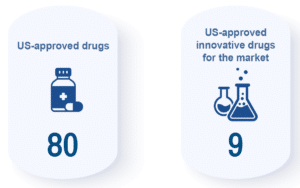
In 2025, we discontinued and withdrew some drugs from the market through the adjustment of operations at Upsher-Smith, redirecting working capital to the rare disease and specialty drug areas; the number of approved products therefore differed from previous years: 80 US-approved drugs and 9 US-approved innovative drugs for the market. While adjusting operations, we continue to reduce the use of organic solvents through formulation improvements and supply chain transformation, investing in green pharmaceutical R&D.
We continue to strengthen our core technologies in nano-formulation, controlled-release, and prodrug design platforms to drive innovation through re-formulation, repurposing, and new combinations, enabling us to develop potential “best-in-class” treatments focused on rare pediatric epilepsy and other areas with high unmet medical needs.
Clinical Trial Standards
A.Commitment to Animal Welfare in Preclinical Animal Studies
To ensure compliance with animal welfare, Bora Pharmaceuticals selects GLP certified contract research organizations (CROs). These organizations must follow the Institutional Animal Care and Use Committee (IACUC) regulations and adhere to the 3R principles (Refine, Reduce, Replace). This approach complies with the animal welfare committee guidelines for humane experimentation. Currently, we have contracted 3 qualified CROs in Taiwan for preclinical animal studies. We commit to applying the same standards to our overseas subsidiaries in the future.
B. Standards for Clinical Trial Monitoring and Auditing
We collaborate with international research institutions to conduct clinical trials in different regions, including the United States, Canada, India, and China, prioritizing the rights and well-being of subjects. All trials strictly adhere to the ICH-GCP guidelines and undergo a thorough review by an independent Institutional Review Board (IRB); in the current trial phase, we only recruit healthy volunteers, and no patients are involved. All clinical trials intended for regulatory submission are supervised by an independent clinical trial quality assurance organization; through our CROs, we develop and implement risk-oriented monitoring and auditing programs and regularly audit our outsourced CROs. In 2025, neither Bora Pharmaceuticals nor our main CROs received any on-site inspection notices from the U.S. FDA; 5 third-party audits were conducted during the year, with 0 trial terminations.