


Material Topics Identification
Bora continuously engages with stakeholders on both a regular and an ad hoc basis to collect the issues they care about, while keeping track of sustainability trends in the domestic and international biotechnology and pharmaceutical industries. Using the material topics of the previous year’s sustainability report as a baseline, we adjust the topic list with reference to global trends and industry benchmarking, and gather input broadly from stakeholders and internal senior executives through questionnaire surveys. The responses are consolidated, reviewed with management feedback, and then analyzed and integrated to form the basis of this year’s material topics. The results of this year’s material topics and the corresponding management approach were approved by the Board of Directors on May 14, 2025.
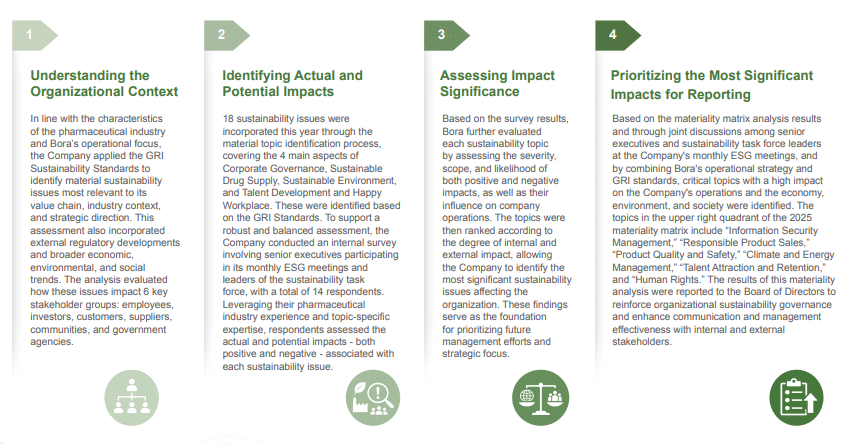
Topic Prioritization
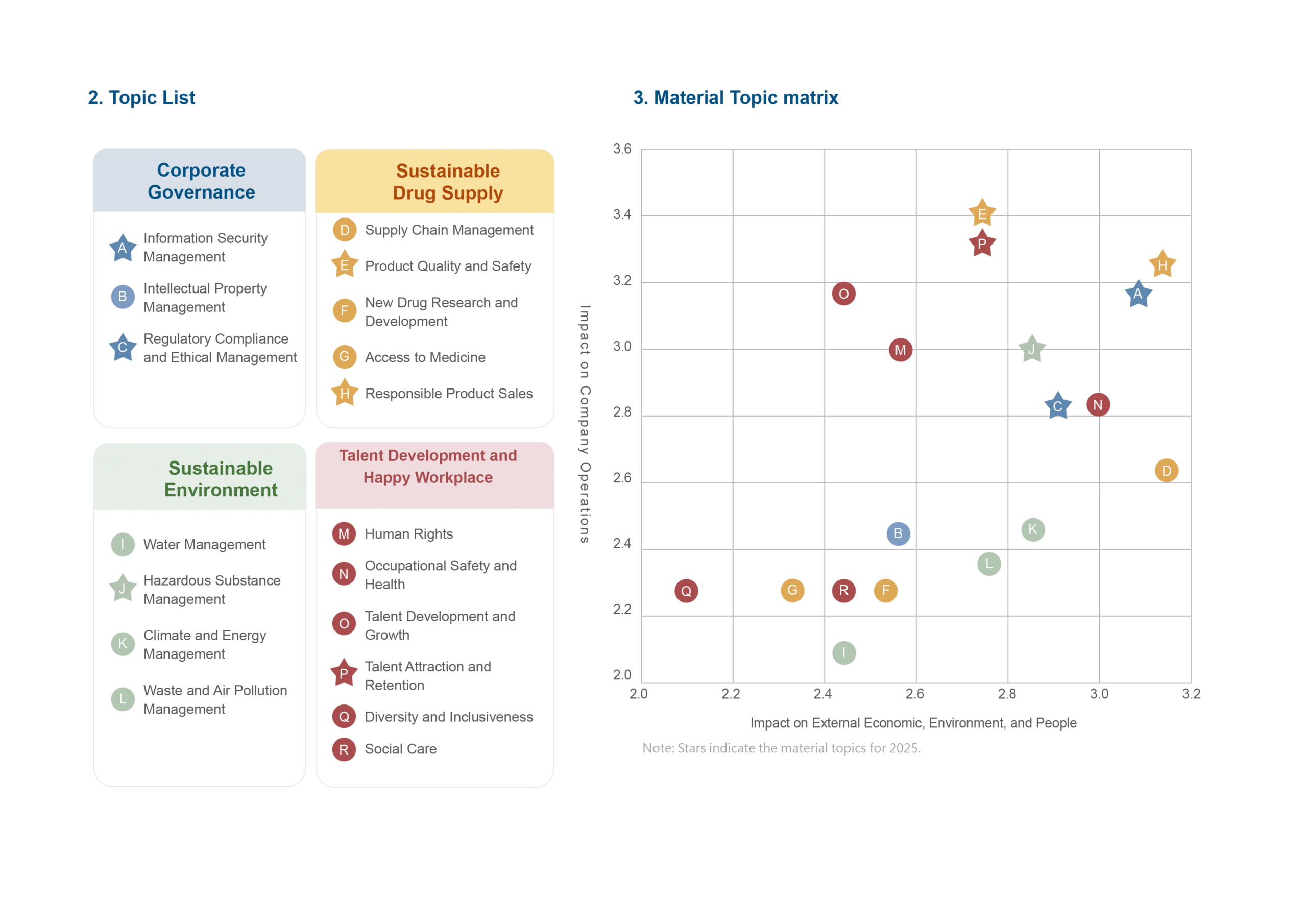
The materiality matrix maps “impact on internal operations” (Y-axis) against “impact on external economic, environmental, and social aspects”(X-axis). Material Topics are evaluated and identified based on their scores and classified as either major or general.
Material Topics and Management Guidelines
In 2025, Bora Pharmaceuticals identified 6 material topics through its sustainability risk assessment process, and formulated corresponding risk management policies and strategies to address potential challenges and advance sustainable development. Details are as follows:
| Aspect | Material Topic | Significant Impact | Policy or Management Action |
|---|---|---|---|
| Corporate Governance | Information Security Management | Information leaks may affect customer trust, trade secrets, and the Company’s reputation. | Establish information security policies, introduce information security management systems, information security incident reporting and response procedures, regular risk assessment and internal and external audits, and information security training for employees. |
| Sustainable Drug Supply | Product Quality and Safety | Failure to comply with FDA, GMP, and other international standards may lead to product recalls, regulatory penalties, customer loss, and damage to brand reputation, or even litigation. | All manufacturing sites strictly comply with international regulations including PIC/S GMP, US FDA CFR21, EU GMP, Health Canada, and Japan PMDA, and regularly undergo audits by regulatory authorities and customers. The Company also conducts internal self-inspections, with each quality system audited at least once annually to ensure continuous improvement and regulatory compliance. Bora has established and effectively implements a quality management system to ensure that all manufacturing and mass production operations meet GxP standards, relevant regulatory requirements, pharmacopeia standards, and product specifications. |
| Responsible Product Sales | Improper sales practices may lead to regulatory risks and a decline in market trust. | The Company has established an internal review system and employee training mechanisms based on the pharmaceutical regulations of the product’s location and third-party organizational standards, ensuring that all product promotion and sales activities comply with regulatory and ethical requirements. Through comprehensive complaint and whistleblowing channels, post-marketing safety monitoring, and regular audits of promotional materials, the Company continuously reviews and improves the compliance and transparency of its sales practices. | |
| Sustainable Environment | Climate and Energy Management | Energy consumption and greenhouse gas emissions may result in environmental impacts and potential carbon cost exposure. | Establish energy management systems, enhance energy efficiency, and implement greenhouse gas inventory and emissions reduction initiatives. |
| Talent Development and Happy Workplace | Talent Attraction and Retention | Talent mobility can affect production stability and organizational development. | The Company has established a fair and transparent talent attraction and retention mechanism through comprehensive recruitment and promotion systems, internal rotations, career planning, and key talent development programs, effectively enhancing employee satisfaction and sense of belonging. Bora regularly participates in international salary surveys to ensure market-competitive compensation and offers a comprehensive and diverse benefits package, including performance bonuses, health insurance, and employee care programs. Labor-management meetings and town hall meetings are held regularly to listen to employee feedback and promote two-way communication. An internal grievance mechanism is in place, complemented by the third-party platform Conduct Watch as a whistleblowing channel. |
| Human Rights | Human rights issues may affect corporate image and supply chain stability. | Formulate human rights policies, implement human rights due diligence, establish supplier management mechanisms, and build complaint channels. |